Classes
Class Descriptions
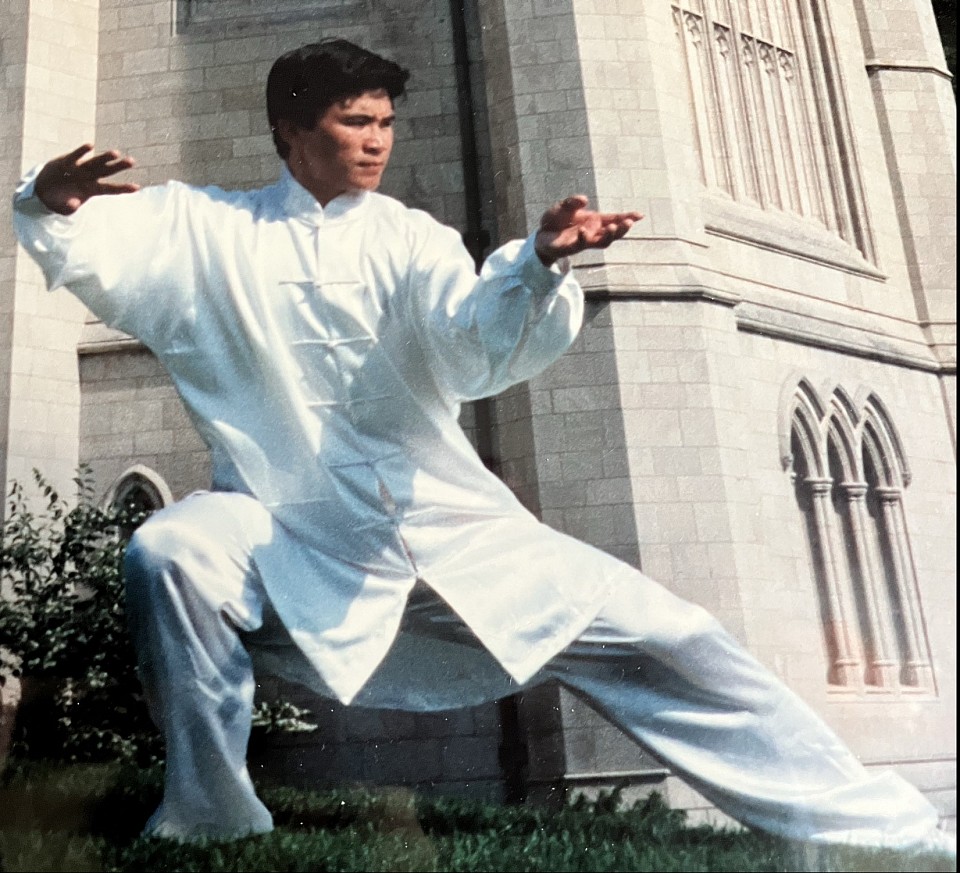
We offer a wide variety of classes in all forms of tai chi and qi gong. Below are some brief descriptions.
Qi Gong is the science of cultivating the body’s internal energy which is called Qi in Chinese. It is a fundamental and essential part of Tai Chi and is suitable for for all levels of students. This ancient practice can take many forms and can be practiced in a variety of ways. Meditative states and greater awareness can be achieved through the use of qigong visualizations and movements.
Chen Style: The Chen family-style is the oldest and parent form of the traditional family styles. It was developed by Chen Wang Ting (c1600 – 1680). Chen-style is characterized by silk reeling, alternating fast/slow motion and bursts of power (fa jin). Chen Style taijiquan is best known for its martial aspect and it closely resemble Shaolin Kungfu in its demonstrations. Chen style is usually practiced by our advanced students who have developed a strong foundation in Yang style.
Yang Style: The most widely practiced style of taijiquan, Yang style was developed by Yang Lu Chan (1799 – 1872 AD) and is best known for its gentle and graceful movements. Beginners are taught the 24-posture Simplified Form, sometimes called the Beijing form for its place of origin. The 24-form is the most practiced taiji form in China and the world over causing many people to have the mistaken impression that it is the only form of taijiquan. At YYTA, you will be taught Training Forms 1 and 2 that Master Xing created to help give students a solid foundation for the 24-form.
Sun Style (pronounced “SOON”) Sun Style taijiquan was developed by Sun Lu Tang (1861 – 1932), the only master who was expert in all three internal styles. He absorbed the best of Chen, Yang and Wu styles to develop his own style. Sun style taijiquan is well known for its smooth, flowing movements which omit the more physically vigorous movements of some other styles. The footwork of Sun style is unique, when one foot advances or retreats the other follows. It also uses an open palm throughout the entirety of its main form, and exhibits small circular movements with the hand. Its gentle postures and high stances make it very suitable for geriatric exercise and martial arts therapy.
Push Hands: A partner-based training exercise that develops sensitivity, balance, and the ability to redirect an opponent's force. It involves two people maintaining contact with each other, either with one or two hands, to practice yielding, leading, and neutralizing force instead of meeting it with brute strength. This practice helps students apply the principles from their solo forms to a dynamic, interactive environment
Tai Chi Applications: The practical self-defense and martial uses of the slow, flowing movements that are often seen as a form of exercise or meditation. They focus on the underlying principles of yielding, redirecting, and maintaining structural integrity to control an opponent.
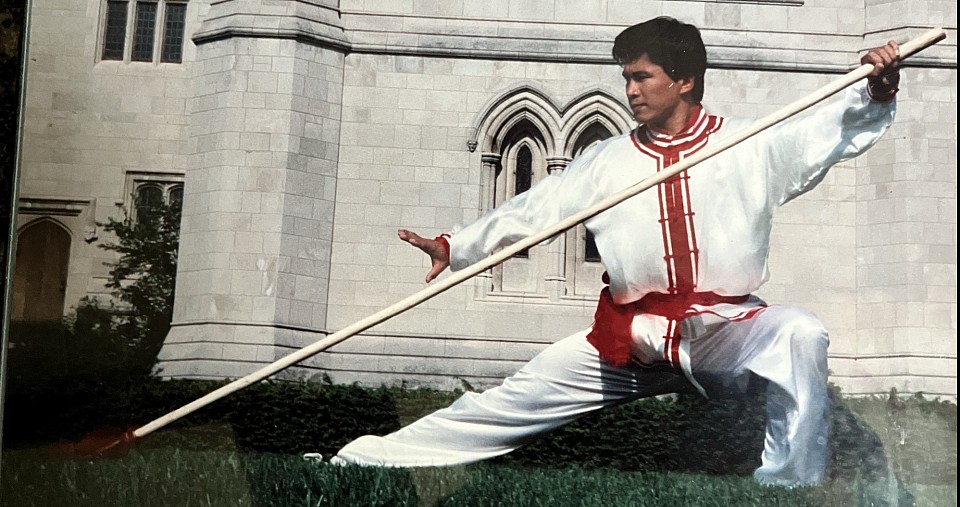
Weapons: Tai Chi Sword, Bo Staff